
Menopause supplements are widely marketed, but do they work? The honest answer is that the evidence depends on the ingredient, preparation, symptom being studied and quality of the research. A product containing several botanicals is not automatically more effective than a single-ingredient product, and findings for one extract do not prove that every supplement containing that plant works.
This guide examines black cohosh, soy isoflavones, red clover, sage, dong quai, chasteberry and wild yam; explains what phytoestrogens are; and offers practical label-reading and safety questions. It is educational information, not medical advice or a claim that any specific supplement treats menopausal symptoms.
What are menopause supplements?
Menopause is a normal life transition marked by the end of menstrual periods. Some people experience hot flashes, disturbed sleep, mood changes or vaginal symptoms during the transition; experiences vary greatly. Menopause supplements may contain botanicals, vitamins, minerals or combinations of ingredients. The name on the front of a bottle is a marketing category, not a standardized formula.
Some products contain black cohosh; others feature soy or red clover isoflavones, vitamins or proprietary blends. Their ingredients, doses and extraction methods can differ substantially. Compare the actual Supplement Facts panels before concluding that two products are interchangeable.
So, do menopause supplements work?
Clinical evidence for herbal menopause supplements is mixed and often limited. The U.S. National Center for Complementary and Integrative Health (NCCIH) has reported little convincing evidence that many commonly promoted natural products meaningfully relieve menopausal symptoms. Trials of soy and red clover isoflavones have produced inconsistent results, and black cohosh findings are not consistently positive.
This does not mean that every study reports the same outcome. It means the available studies do not establish reliable benefits across products, people and symptoms. Some products may use different ingredient forms or combinations from those tested. A carefully worded claim about an individual ingredient is not proof of benefit for a finished multi-ingredient formula.
For bothersome symptoms, a healthcare professional can help explain evidence-based options, including prescription and nonprescription approaches, based on personal health history.
Why research results vary between products
- Ingredient identity: Different plants or species may be grouped under similar marketing descriptions.
- Preparation: Ground plant material, water extracts and solvent extracts can contain different proportions of compounds.
- Dose: The milligram amount per serving may not match the tested dose or a standardized marker amount.
- Study design: Small trials, short follow-up periods and differences in comparison groups affect confidence.
- Outcome measured: A change in hot-flash frequency is different from overall wellbeing or sleep-quality scores.
- Combination formulas: Evidence for one extract cannot automatically be transferred to a blend.
That is why phrases such as “clinically proven ingredients” should be examined closely: was the specific product studied, or only an ingredient in a different preparation?
Black cohosh: what does the research show?
Black cohosh is a North American plant commonly included in menopause-focused products. Researchers have studied it for symptoms such as hot flashes, but results have varied by preparation and trial. Evidence summaries do not establish that every black cohosh supplement reliably relieves menopausal symptoms.
Safety matters, too. Rare cases of liver injury have been reported in people taking products labeled as black cohosh, although the relationship to the herb is not always clear. People with liver concerns should consult a clinician before use; anyone developing symptoms such as dark urine, jaundice or concerning abdominal pain should seek medical attention. See NCCIH's black cohosh information.
Soy isoflavones: what are phytoestrogens?
Isoflavones are plant compounds found in soybeans. They are sometimes called phytoestrogens because they can interact with certain estrogen-related biological pathways. That term does not mean a soy supplement is estrogen, restores estrogen levels or functions like prescription hormone therapy.
Research on soy isoflavones for menopause symptoms has produced mixed results, and findings can depend on preparation and study design. People with a soy allergy must check products carefully. Anyone with a hormone-sensitive condition or questions about taking soy supplements during cancer treatment should discuss their individual circumstances with their healthcare team.
Remember that soy foods and concentrated isoflavone supplements are not necessarily equivalent in dose or composition.
Red clover and isoflavones
Red clover is another plant containing isoflavones. It appears in some menopause formulas and is often compared with soy. However, the plants have different chemical profiles, and trials of red clover extracts have not produced consistent evidence of relief from hot flashes or other menopause symptoms.
When comparing red clover products, look at the part of the plant used, the extract specification and the actual amount listed per serving. A high number of milligrams does not necessarily equal a higher isoflavone amount.
Soy isoflavones vs. black cohosh vs. red clover
| Ingredient | What it is | Key comparison point |
|---|---|---|
| Soy isoflavones | Plant-derived compounds from soy | Includes phytoestrogen compounds; check soy allergen warning |
| Black cohosh | Botanical root/rhizome preparation | Not the same as soy isoflavones; examine extract and liver-related cautions |
| Red clover | Botanical preparation containing isoflavones | Different plant and composition from soy; examine extract specifications |
None should be equated with prescription estrogen or regarded as a replacement for individualized medical care.
What about sage, dong quai, chasteberry and wild yam?
Sage
Sage appears in some herbal menopause formulas and has been studied in limited settings. The presence of sage in a blend does not establish that the blend has clinical benefits.
Dong quai
Dong quai has a history of traditional use, but controlled evidence for menopause symptom relief is limited. It may pose interaction concerns, including with some medications; professional advice is important.
Chasteberry
Chasteberry is better known for research into menstrual-cycle-related concerns than for robust evidence about menopause. Its presence does not make a supplement hormone therapy.
Wild yam
Wild yam is sometimes associated in marketing with progesterone. The human body does not simply convert the wild-yam compounds in an oral supplement into progesterone. Do not interpret wild yam on a label as a source of prescription progesterone.
Licorice root
Licorice is important to recognize for safety. Some licorice constituents can affect blood pressure and potassium levels, particularly at substantial exposures or with certain drugs and medical conditions. See NCCIH's licorice root information.
Are multi-ingredient formulas better?
Not necessarily. A multi-ingredient formula may be convenient for someone seeking several botanicals in one serving, but convenience is separate from demonstrated effectiveness. A supplement that combines studied ingredients may not itself have been tested in a clinical trial. Ingredient amounts and potential interactions also become more important as formulas grow more complex.
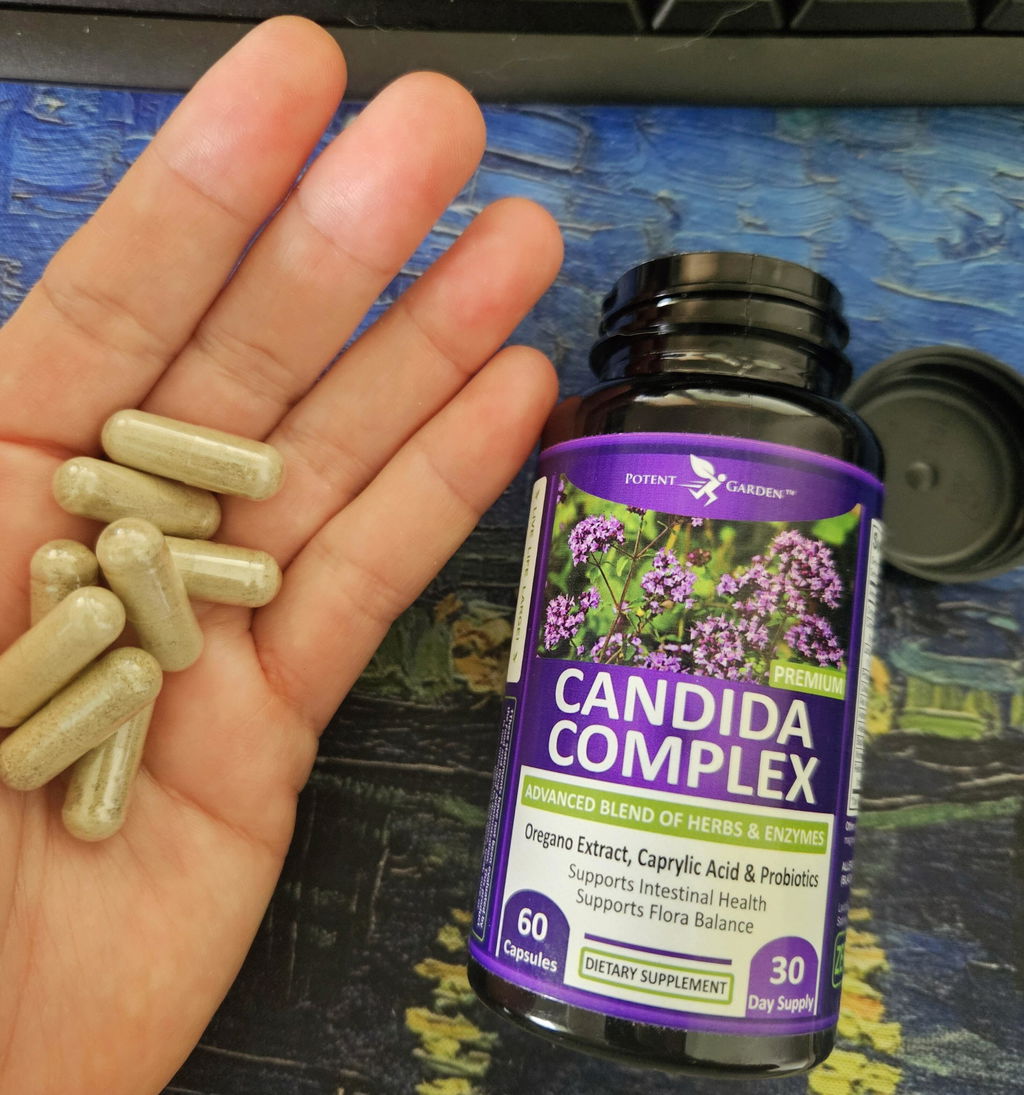
For example, Potent Garden Menopause Support contains soy isoflavones, black cohosh, red clover, sage, dong quai, licorice root and additional botanicals. The label lists 60 capsules and a two-capsule daily serving, which provides 30 days at labeled use. It contains soy and uses bovine gelatin capsules. These are factual formula details, not evidence that the finished product treats hot flashes, night sweats or other medical symptoms.
How to compare menopause supplement labels
- Start with the ingredient list. Determine whether the bottle contains herbs, vitamins, minerals or a combination.
- Read the serving size. A bottle of 60 capsules might last 60 days at one daily or 30 days at two daily.
- Check extract descriptions. A botanical's milligram amount and an extract percentage are not interchangeable measures of effectiveness.
- Look for allergens. Soy-containing supplements require special attention for people with soy allergies.
- Read capsule materials. Bovine gelatin is not suitable for vegetarian or vegan diets.
- Check evidence and interactions. Be wary of products that promise broad symptom relief without support for the actual formula.
- Compare cost per daily serving. Divide the purchase price by the number of labeled servings, while considering differences in formula and safety.
When should you speak with a healthcare professional?
Talk with a clinician before starting menopause-focused botanicals if you are taking prescription medication, considering or using hormone therapy, have liver disease, hormone-sensitive conditions, blood-pressure or potassium problems, or are pregnant or breastfeeding. Some ingredients can interact with medications or be inappropriate for particular health histories.
Seek timely medical assessment for unexpected vaginal bleeding, severe or persistent symptoms, or symptoms that disrupt daily life. Supplements should not delay diagnosis or appropriate treatment.
Frequently asked questions
Do menopause supplements actually work?
Evidence varies; many commonly marketed ingredients have not shown consistent benefits in well-designed research, and the results from individual ingredients do not establish effectiveness for a finished blend.
Is black cohosh the same as red clover?
No. They come from different plants and contain different constituents.
What are soy isoflavones?
They are plant-derived compounds found in soy, often called phytoestrogens because of certain estrogen-related biological interactions.
Are phytoestrogens the same as prescription estrogen?
No. They are not interchangeable with prescription hormones or hormone therapy.
Can I combine botanical menopause supplements with hormone therapy?
Ask your clinician or pharmacist before combining supplements with hormone therapy or prescription medicines.
Are multi-ingredient formulas proven to be better?
No. A larger ingredient list is not evidence that a finished formula works better.
Are soy-containing supplements safe for someone with a soy allergy?
People with soy allergies should avoid products containing soy unless advised otherwise by a qualified healthcare professional.
Does wild yam provide progesterone?
Wild yam on an ingredient label should not be treated as equivalent to prescription progesterone.
How long do supplements take to work?
There is no reliable universal timeframe. Research differs by ingredient, preparation and outcome; do not assume any specific product will produce an effect.
Sources and further reading
- NCCIH — Menopausal Symptoms: In Depth
- NCCIH — Menopausal Symptoms and Complementary Health Practices
- NCCIH — Black Cohosh: Usefulness and Safety
- NCCIH — Licorice Root: Usefulness and Safety
Educational information only; not a substitute for professional medical advice. Potent Garden dietary supplements are not intended to diagnose, treat, cure or prevent disease.
Leave a comment
This site is protected by hCaptcha and the hCaptcha Privacy Policy and Terms of Service apply.